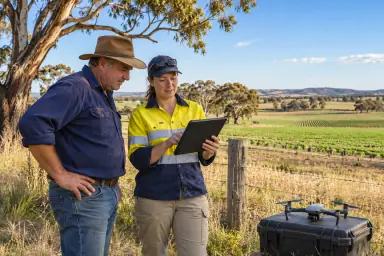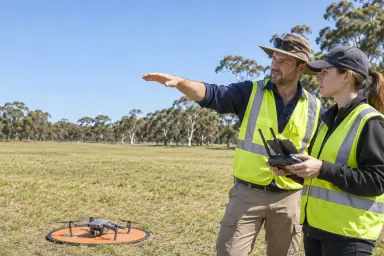

A business can buy a drone and nominate a pilot in a day. Building a repeatable operating capability takes a different conversation. Who authorises a flight? What information must it produce? What happens when weather, a site hazard or a data issue changes the plan?
Start with one job worth doing
Select a specific task such as a site progress record or a routine asset observation. Define the expected image or data output, the person who receives it and how they will judge its quality. This gives the team a practical basis for aircraft choice, training and a pilot project.
A broad ambition to “use drones across the business” leaves too many decisions open. A well-scoped first task can be repeated, reviewed and improved.
Confirm the operating category
The aircraft, purpose, location and operating conditions determine the applicable CASA requirements. Some eligible micro or excluded-category operations do not require a RePL or ReOC; other operations may need licensed pilots, a ReOC and separate permissions. A ReOC is held by the operator, while a RePL is held by the pilot. CASA’s ReOC guidance is the source for current requirements.
Do this assessment before assuming every staff member needs the same course or that a pilot licence settles all approvals.
Give the team clear roles
At minimum, decide who owns the programme, who pilots, who coordinates with a site contact and who uses the output. Decide how flights are requested, approved, recorded and stopped. These procedures should be proportionate to the operation and consistent with any required operating framework.
Train people for the decisions they actually make. A site manager may need to understand flight boundaries and access, even if they never hold the controller. A data user may need to specify capture quality and retention, even if they do not fly.
Practise the real workflow
Classroom knowledge matters, but workplace training should connect it to the site and task. Rehearse the preflight brief, equipment checks, communication with nearby workers, safe recovery and handover of the result. Ask a provider to explain what practical attendance and assessment are included.
Test before scaling
Run a controlled trial and review safety observations, staff time, output quality and any repeated problems. Use the findings to adjust the task brief, training and equipment before adding more sites.
Our corporate training page helps frame a team enquiry. Drone Training has no confirmed team provider or programme dates yet; the brief is useful whether you work with us later or another provider now.