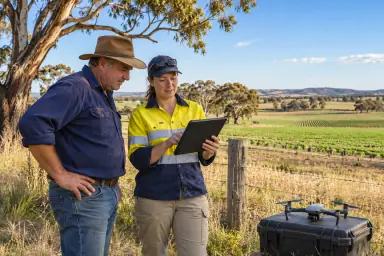
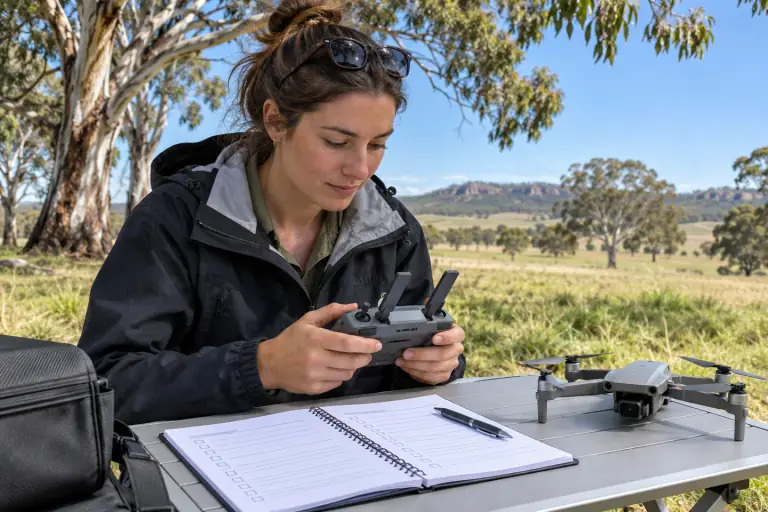
The first flight is easier when the aim is modest. You do not need a complex camera move or a long route. You need a suitable place, a clear understanding of the controls and enough time to stop if conditions change.
Pick a low-pressure objective
Make the goal “take off, hold a stable hover, move slowly and land”. Practise one control input at a time. A short, successful session teaches more than using every flight mode on day one.
If another person is helping, agree who watches the aircraft and who speaks up when a person, vehicle or animal enters the area. Keep the group small enough that instructions stay clear.
Check the exact place, not just the suburb
CASA’s national drone safety rules apply, but the flight site still matters. Airport proximity, airspace, people and land-manager rules can change what is permitted. Use a CASA-verified drone safety app for the specific location and confirm permission to use the land where needed.
Choose an open area with room for a safe launch and recovery, and avoid a busy park simply because it looks convenient on a map. Walk the site first. Look for wires, trees, uneven ground, livestock, spectators and a safe place to stop.
Set a weather and equipment limit
Read the aircraft manual and check the manufacturer’s limits. A first flight is not a good time to test strong wind or uncertain rain. Confirm charged batteries, a healthy controller link, the correct return-to-home setting and enough daylight. If anything important is unclear, wait and resolve it before take-off.
Brief the flight in one minute
State where the aircraft will lift, how high and far you intend to go, who has the controls and where it will land. Decide what will cause an immediate landing: another person entering the area, unexpected wind, a warning on the controller or loss of visual contact.
Keep the aircraft within visual line of sight and follow the current CASA safety rules. A checklist should support those decisions, not become a substitute for them.
Review before the next flight
After landing, note what felt easy, what felt uncertain and what you would change about the site or plan. That small debrief gives your next practice session a purpose. Our first-flight checklist provides a reusable prompt, and the drone essentials pathway explains the skills to build next.